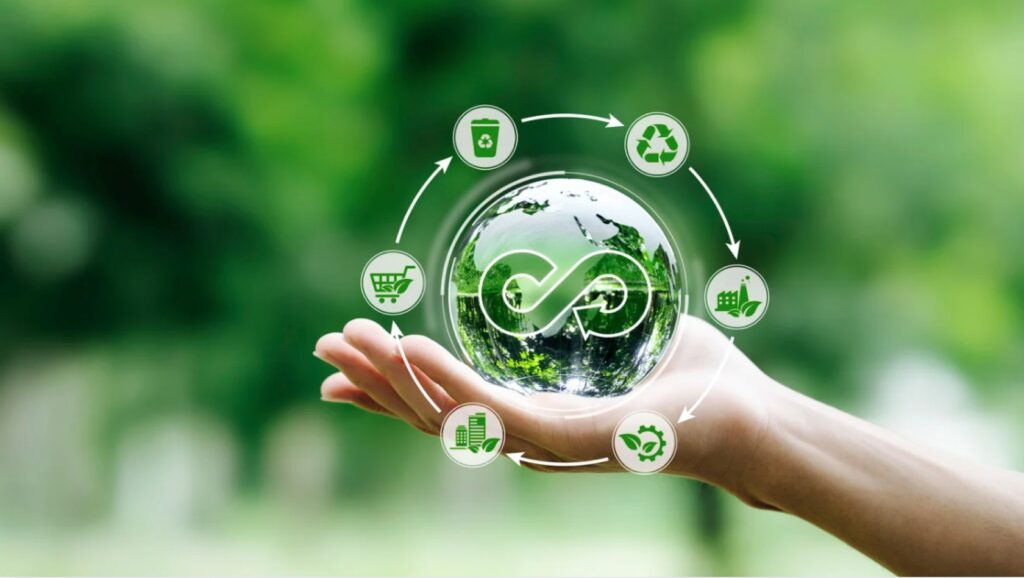
In an increasingly complex and demanding business environment, the sustainability and efficiency ceased to be desirable goals and became indispensable conditions for competitiveness. In this scenario, the convergence between Artificial Intelligence (IA) and circular economy is emerging as a strategic formula to drive growth with responsibility, he said. Juan Francisco Aguilar.
In an opinion column published by ESG Expansionthe Director General of Dell Technologies Mexicosaid that the IA is already transforming the way organizations operate, automating processes, optimizing the use of resources and enabling decisions based on advanced data analysis.
However, he indicated that, by integrating with circular models of production and consumptionThe potential is multiplied by reducing waste, extending the life cycle of products and making reuse and recycling processes more efficient.
"This combination represents a key opportunity to redefine economic value from sustainability," said Aguilar.
A country with potential, but low circularity
The General Director of Dell Technologies Mexico, said that our country is at a key juncture. According to INEGI data, the circularity index of the country is only 15,14%, which reveals that there is still ample room for improvement in adopting sustainable models. This is where AI can become a decisive accelerator.
"Technologies such as machine learning and predictive analytics are being applied, for example, in devices that detect faults before they manifest themselves, avoiding unnecessary replacements. This not only reduces maintenance costs, but also significantly reduces e-waste," he said.
Globally, companies implementing AI in resource management have achieved a 10% to 20% reduction in the use of virgin materials, generating savings and positive impacts on the environment.
An opportunity for Latin America
Mexico y Latin America are uniquely positioned to embrace this synergy. The region has a diverse industrial base, an abundance of natural resources and accelerating digitalization. According to the Economic Commission for Latin America (ECLAC), the integration of these factors with technologies such as AI can drive a systemic transformation towards more sustainable models.
Concrete cases already exist. In Mexico, a pilot platform for circular economy for the construction industry, driven by the Semarnatconnects companies that generate waste with others that can reuse it, using technology to facilitate traceability and process efficiency.
Breaking barriers with innovation
Beyond the environmental impact, Aguilar emphasized that the IA can also resolve historical obstacles in the adoption of the circular economyIt can facilitate regulatory compliance through intelligent monitoring systems, optimize reverse logistics and make viable business models previously considered unaffordable.
"The time is right for business leaders to embrace the circular economy as an essential pillar in their strategies. Organizations that integrate this approach, driven by innovation and leveraging AI, will not only respond to sustainability demands, but also create a path to strong leadership in a market where sustainability is no longer a luxury, but a strategic competitive advantage," he stressed.
Those who opt for this model will have made a responsible decision and will have a positive impact for future generations, he said.
Source: ESG Expansion